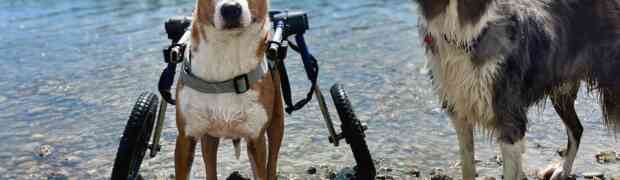
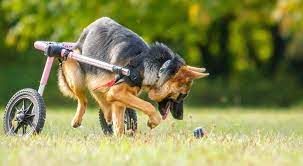
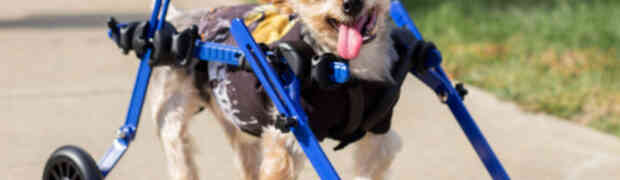
By nakedbarra, on May 24th, 2013 Every day we have new customers call us, saying their dog is having mobility issues, their cat needs an amputation, or they just need some assistance.
Every day, I have people tell me “He’s 14, I know thats old”. I always ask people “does he still look at you the same? Does his tail wag, and does she purr, even if she can’t move?” When they answer yes to those questions, I tell them, AGE IS NOT A DISEASE. If you feel your pet is ‘all there’ mentally, then age is just a number! There are a ton of products to help humans in their old age, and now there is products to help your pet age gracefully.
Unfortunately, . . . → Read More →
By nakedbarra, on May 24th, 2013 We’ve written a lot about pets and their health. How to keep them healthy, how to prevent them from being unhealthy, how to maintain their health once they get older, how to do a wellness check, and how to cope with an animal whose very unhealthy.
How do pets affect our health? Good question.
Basic answer? Very ‘paws’ itivly.
Our lives are stress filled little balls of fire. It’s a constant and consistent up, down, up, down, sideways, loop-de-loop and just when we think things are okay, we’re sent propelling straight back down to restart the whole process again. It’s okay, that’s what keeps us on our toes . . . → Read More →
By nakedbarra, on May 22nd, 2013 Keeping your pet happy and healthy is the number one priority for pet owners. We buy the best toys, take them to the vet for check ups, and exercise with them; everything and anything we can do to help our furry friends. Since prevention is a key stage in your pets well being, our friends at healthypetsnh created this helpful “Snout to Tail Wellness Assessment”. This should be done 3-5 times a week to be the most effective, and isn’t just for those handicapped and special needs animals. If you find an abnormally on your pet, contact your Vet to discuss.
Head: Snout- The nose should be cold and wet. Not too wet with discharge and not . . . → Read More →
By nakedbarra, on May 17th, 2013 What you need to know before adopting a Special Needs Dog
A Special Needs dog is any dog that requires help or assistance doing the things that other dogs can do without help. Like humans, special needs in dogs may be a physical or mental disability.
The term special needs can cover a wide range of issues. It may be something simple like an amputation, or something as difficult as mental issues that make your pup afraid of everything, including his own shadow. Caring for a ‘special needs’ animal may be a daunting task if you’re not prepared and knowledgeable about the disability that the particular dog has.
Many . . . → Read More →
By nakedbarra, on May 13th, 2013 Trupanion offers coverage for orthotics, prosthetics, and carts under core coverage. These assistive devices help disabled pets live a happy, normal life.
Pet owners are always looking for ways to provide the best quality of care and quality of life for their pets. When a crisis strikes, resulting in a disabled pet, mobility devices are a phenomenal option to keep that pet living a happy, healthy life. The cost of these devices can sometimes be outside a family’s budget, but Trupanion policyholders have the opportunity to move forward with this treatment option at 90% coverage.
Mobility devices are . . . → Read More →
By nakedbarra, on May 11th, 2013 To protect themselves from predators, animals naturally hide their pain. Your dog may be suffering even though she isn’t showing obvious signs. Observing your dog’s behavior is vital to managing his or her pain. To help you understand your dogs body language:
Abnormal chewing habits- If your dog is showing abnormal chewing habits, such as dropping its food or chewing only on one side of the mouth, it may have a dental disorder or a mouth tumor. Additional signs of dental disorder may include weight loss, bad breath or excessive face rubbing
Drastic weight loss. – Pain directly influences your dogs eating habits. dogs with arthritis or muscle soreness may not want . . . → Read More →
By nakedbarra, on May 9th, 2013 With the Summer getting close, it will soon be road trip season and more vacationers are choosing to include their pets in the adventure. While we have all heard how crucial it is for us to buckle up, we may not always realize the importance of car safety for our animal companions. Whether you’re going on a two-day drive or just a short trip to the grocery store, you should keep your pet’s safety in mind when bringing them in the car. Here are a few tips on keeping your pet safe when you take them for a drive.
Pets belong in the back seat. Not the front seat and especially not in . . . → Read More →
By nakedbarra, on May 5th, 2013 Interested in choosing a pet health coverage plan, but feeling the effects of information-overload? Employ these tips as convenient checkpoints along your journey.
1. Learn about the prevailing characteristics of your pet’s breed. In doing so, you will become educated on their most common health issues – an important awareness to possess as you seek out pet insurance.
2. Familiarize yourself with the terms and concepts associated with the pet insurance industry. Understanding key words like deductible, premium, pre-existing condition and payout limit will allow you to navigate companies’ plans comfortably and confidently.
3. Compare and contrast the policies of pet insurance competitors. Patterns will begin to emerge, helping you clearly highlight the . . . → Read More →
By nakedbarra, on May 3rd, 2013
Curious to see when you puppy is no longer a puppy, and is in fact considered a senior? 
The old classic “one human year equals seven dog years” is an easy way to calculate and relate to your dog’s age, but isn’t the most accurate. Large breed dogs (i.e. Great Danes) are considered a senior at 6 or 7 years of age, whereas small breeds (i.e. toy poodle), aren’t considered a senior until their teen years. I have seen more than one poodle in the 18 to 20 year range. There are studies to suggest that certain breeds are more long-lived than others, too.
As a general rule of thumb, . . . → Read More →
By nakedbarra, on April 29th, 2013 What would really happen if your pet got sick? We can talk until we’re blue in the face about why having pet health insurance is a smart move, but the truth is, you can always rationalize our reasoning away. Think about the alternatives and see why they don’t really hold up under scrutiny. “If my pet gets sick, I’ll just use my savings.”
If you’re like most of us, you probably don’t have as much in your saving account as you would like (and it probably comes out just as fast as it goes in). Using your personal savings is just one way to pay for unexpected veterinary bills. Take a look . . . → Read More →
|
|